I have wanted to do the train trip through the Pedas River Gorge for a long time. Two years ago I did make it as far as the Tanjung Aru Station but was told that the Beaufort to Tenom section was closed, so I cancelled the plan and returned to the hotel only to hear later, that had I gone ahead with the trip, the train I would had taken to Beaufort, crashed into a oil tanker. Gives me goose bumps until today thinking about it.
So in August 2015, I turn up at 7.00 am at the Tanjung Aru railway station for my second try. The sign at the ticket counter states that it would open at 7.00am but the staff turned up at 7.15am and this seems to be the norm at all the stations, the ticket counter only open about 30 minutes before departure even though the signs state otherwise. In Beaufort the counter was open and the staff still refused to sell me a ticket for the train that was departing 3 hours later, telling me to come back at 12pm and in that case the counter never reopened until 12.40pm.
On the left the sole China made locomotive with SSR and right is the last wood burning steam engine in the world
Anyway, at the station that morning were the only Diesel Multiple Unit DMU, Mainline locomotive and steam locomotive in their inventory, all in one row. The trip report of my ride on the steam engine click here North Borneo Railway
The DMU built by CSR Ziyang Locomotive Co. Ltd would operate the service to Beaufort leaving sharp on time at 7.45am.
Diesel Multiple Unit
The DMU was showing some wear and tear but was comfortable with soft seats and aircon. The toilet in my coach however had no water, let alone a faucet at the sink.
comfortable seating
Sneak peek into the drivers cabin
The journey mainly hugged the coast before heading inland passing mangrove swamps, farm land and soon arrived at Beaufort about 10 minutes late.
Excellent view of the beach
passing a swamp
I now had a 3 hour wait before the next train at 1pm. I took this time to film the DMU returning to Tanjung Aru at 11am and also take a short walk around the town to catch a bite to eat.
There is a nice cafe and also a coffee shop across the road from the station. The cafe had some old black and white photos of the railway. The Chinese coffee shop serves noodles and rice made to order.
Beaufort is named after former British Governor L.P. Beaufort and is a small town of about 60,000. The town centre is just nearby the station with it's two rows of wooden shophouses that are on stilts. That is something that you would notice about buildings here is that, they all are raised at least 4 feet from the road. Beaufort suffers periodic floods of the Padas river.
The local Tamu or open market is held weekly on Friday evening until Saturday
afternoon is something to look out for if you are around on those days. Local produce such as fresh fruits, vegetables, fresh meat
and live poultry are sold. During my visit, Durians were on sale everywhere including the train station!
The Beaufort Station
A view of the station and the DMU from the cafe across the street
A little market stalls in Beaufort town
The old way of selling things
A new use for your car
A crowd began to appear around 12pm but the counter still wasn't opened. The counter staff turned up about 12.15pm with her children then proceeded to set up bedding for them next to her counter. A line started at her counter, she just ignored us and continued to make milk for her children before finally selling tickets at around 12.40pm. That is the kind of laid back work ethic that you would notice on this railway.
An old railcar with a new coat of paint
The DMU ready to return to Tanjung Aru
Close to departure, the platform began to fill with school children running around playing and making noise like how all school children do all around the world.
The train for the second leg of my journey was hauled by a Hitachi Locomotive no. 6105 made in 1992. About 5 minutes to departure it appeared from the workshop and hooked up to the 3 coaches that were standing by on platform 2. I read that these coaches were made in the late 1930's but I not sure if that is correct.
The tracks from Beaufort to Tenom have very tight bends and weak tracks that can't handle the long based and heavy new trains. So for this part of the network, the old rolling stock continue to earn their keep.
The locomotive that has more than 2 decades of service
The three coaches waiting in platform 2
Bright blue and red livery
Not very safe to walk between coaches when the train is running
I must say the coaches have a nice bright blue and red livery. The interior however was austere with plain green seats covered in PVC and lacked any form of cooling.
The interior has seen better days
The passengers consisted of a mixed of students and locals returning to their homes along the line. They had gas cylinders, wire fencing, zinc roofing, bags of rice and other essential items that were placed along the aisle and door ways.
Waiting to depart. Note the door that remained opened through out the journey
The train departed on time and we stopped at halts along the way to pick up and drop off school students on their way home. If I was in a modern train, I would have been irritated by the shenanigans of the kids but somehow in this rickety train it just felt right to have a noisy bunch of kids, I was amused watching them.
Once outside Beaufort, the rail line starts to follow the banks of the Padas river. The rail track hugs the curves of the river. Buildings start to disappear and are replaced by trees. Soon we are truly in the rainforest and the only signs of human life would be the sporadic wooden homes that appear every once in a while.
Sit on the right side to enjoy views of the mighty Padas
Breathtaking views of mountains and water
The long and winding rail track
The railway was built more than a 100 years ago to transport tobacco from the highlands of Tenom to the port at Weston and Jesselton now called Kota Kinabalu. Construction began in 1896 under the command of a British engineer and his Murut assistant with workers from Japan.
Once completed in 1903 the railway was 193km long but during World War Two the entire network was destroyed by the Japanese. After the war in 1945, the 24 Australian Infantry Brigade Group members operated the railway using converted jeeps!
In 1949, the railway was reconstructed and once again in 1960, an ambitious programme to rehabilitate the network and improve services was implemented but in the late 1970 it began a slow decline, that by 2007 it closed completely until it was reopened again in 2011 after rehabilitation work was completed. Today, the 134km railway has 14 stations and many halts that serve locals and also tourist that want to go white water rafting on the Padas rapids.
The train ends it's journey at the station called Halogilat. The last section of the railway from here to Tenom needs even lighter locomotives and coaches. When we pull up to the station, the next train is already standing-by on the same platform after transporting a huge group of tourist who had just finished their rafting adventure.
"kambing" or goat class
The one of the two "coaches" that make up the final train
There is a quick rush of passengers changing trains and once everyone is on board their respective trains, off we go again. The river from here is full of rapids that white water rafters from all over come for an adrenaline filled ride, with it's class III and IV rapids.
The next major station is Rayoh where the rafting companies load their equipment for transportation to Pangi where they are based. We are now truly in the Padas Gorge. The tracks are just about a metre from the river on the rightside and a metre from side of the mountain on the left. Travelers would notice that there is a lot of repair work along the tracks to re-enforce the slopes and banks.
The next station is Pangi, where another batch of students and teachers board for the last leg into Tenom.
The little train that cuts through the Padas Gorge
The rough waters of the Padas river
Once towers come into sight, it's a signal that we have arrived at the
Tenom Pangi Dam which is the only major
hydroelectric dam in Sabah. It also indicates that we are close to Tenom.
The Pangi Dam
The Tenom station is small, with a few amenities and I walk out over to the taxi stand across the road and head to the hotel for some much needed rest. I stayed at the Perkasa Hotel, aside from it's hill top location, it was horrible place to stay.
The Tenom station
The small town of Tenom from my hotel room
My original plan was to depart on the 1pm train the next day but since there was nothing to do in Tenom and the hotel was so grotty, I decide to leave early the next morning on the 7.30am train. Arrived the next morning at 7am and the ticket counter wasn't open as usual. Slowly the passengers started turning up. An interesting mix of teachers, students, a group of oil rig workers, rafting crews and the locals on the way to the city.
The teachers and students are from a school in Pangi and the railway is the only way to the school, so they do this trip every school day. Because of the train schedule, the school starts later than normal at 8.30am as the train arrives at 8.10am.
The workshop/depot at Tenom
The same rake as yesterday, operated this 7.30am service. The locomotive on duty is almost as old as I am, built in 1968 by Hitachi.
Waiting at the Tenom station
Behind the locomotive is an old Wickham railcar that has now been converted into a passenger coach. The fans don't work and the seats are very basic with a little cushioning covered in PVC
Formerly a railcar made by Wickham of the UK
The last passenger "coach" was once a cargo/goods wagon but now put into use transporting humans. Because many of the passengers bring on large items, this wagon enables them to bring on all kinds of "baggage" back to their homes along the railway track. During my trip I saw agricultural produce being taken to the towns and then passengers return with food and other essential items purchased from the town. The wagon is also for the rafts and other equipment used by the white water rafters.
After a false start, we once again began slowly heading for the Padas Gorge and Halogilat. The cool morning air made this trip a lot more pleasant than the day before. After passing the dam we pulled into the station at Pangi where teachers and students headed to the school across the tracks from the station.
Approaching the Pangi Dam
The dedicated teachers of the school in Pangi
The shed where the children wait for the train
The primary school for children living in the nearby villages
The school at Pangi
Over the years a few trains have ended up in the river
Inspection trolley ahead
The trolley had to lifted off the tracks for us to pass
The wild rapids of the Padas river indicate that we were close to the next station, Rayoh. This train on it's afternoon service would pick up all the tourist after their white water rafting adventure that morning.
I have traveled the whole rail network in Malaysia and I think the Rayoh station has the most beautiful view ever! Standing on the platform you will see the river and a mountain covered in thick forest rising up on the opposite banks of the river. Breathtaking indeed.
At Rayoh station
The view from the station
The view from across the platform
I took a seat at the door for the next part of the trip, something that I would never be able to do on a train in other parts of the country. The sight of the mountains in the morning as the sunshine slowly reaches down into the valley below is something I will always cherish and remember. This has to be the most breathtaking train trip in Malaysia, far better than the more well known "jungle train" of the east coast line in the peninsular.
Not recommended!
A breathtaking shot of the Padas River Gorge in the morning
We approach Halogilat to a sight of a horde of tourists waiting to board our train to Pangi for rafting, and like the day before I had to rush from one train to another for the next part of the trip.
All change at Halogilat
When you travel on this line between Rayoh and Tenom, you may notice yellow sign boards warning that the use of trolleys are illegal. When the trains don't run, the only way people can travel is by using home made trolleys on the tracks.
Homemade trolley. Photo taken from jr.hoganblogspot.com
The locomotive was quickly uncoupled and repositioned
Once at Beaufort, I have about one and a half hours before the next train to Tanjung Aru, so there is still enough time to get breakfast at the cafe across the road from the station and take more photos.
The locomotive is quickly uncoupled and then repositioned before moving our train away for the incoming train from Tanjung Aru which is hauled by a locomotive instead of the usual DMU on this day, as I was told it had technical problems that day.
The locomotive had one Wickham railcar and three former KTMB coaches, so it needed the longer platform 2. As the 11am departure time approached, the temperature in the coach started to soar. The fans were not working, and until we moved there was no air circulating inside.
Made in China by CSR Ziyang Locomotive Co. Ltd
The left windscreen seems to be damaged
The coaches making up the 11am service to Tanjung Aru
The coaches were is a sad condition with the glass on some windows missing and the first seat I took wasn't even fully secured to the floor. The people of Sabah deserve better service, they deserve trains that are in good working condition and operated in a more professional manner.
The loose seat
They deserve better
Once we leave Beaufort, we pass towns like Membakut, Bongawan, Kimanis, Papar, Kawang, Kinarut and Putatan before arriving in Tanjung Aru.
If you have had an overdose of river and jungle views, then once near Kimanis look out for views of the sea. The tracks start to follow the beach and at some places, it runs right up to the beach.
Passing a bridge over the mouth of a small river with brackish water
Another feature to look out for, is the only railway tunnel between Kota Kinabalu and Beaufort, which is about
70m in length. The tunnel cuts through the hills of Pengalat Besar, Papar. It is about 10km from Kawang.
Pengalat tunnel
I am the first to say that this is not the most comfortable train ride, but it is truly the most interesting and the most beautiful rail journey in Malaysia. The views were at times simply stunning. If you are a person who needs air conditioning and pampering, this is not for you. If you need to travel fast, don't take these trains. It's for those who want the experience to be enriching, to meet people, love trains and want to feel like what train journeys were like decades ago, get a ticket and allow yourself to be enveloped in the rail Sabah experience. It reminded me of my train journeys when I was young on the mail train to Butterworth or Singapore, sticking my head out the window and feeling the air rushing pass.
Here no one cares that a fellow traveler has a parang or machete slung across his back or that someone is walking through the train selling durians, while the other passenger next to you has a gas cylinder and some wire fencing with him.
I normally hate noisy children when I travel but here, I actually enjoyed the antics of the school kids. The innocent smiles and their enthusiasm was refreshing for my jaded city soul. It was touching to see the tired teachers fall asleep in the afternoon heat as we were rocked from side to side on the rails to Tenom. It was interesting chatting with the 4 young men carrying life jackets with them as they are returning to their job on the oil rig.
I hope you enjoyed reading this as much I as had taking this journey.
Just returned from a great train trip in Sabah on the island of Borneo. Until I get down to editing the video and writing the blog post, I have a little teaser......
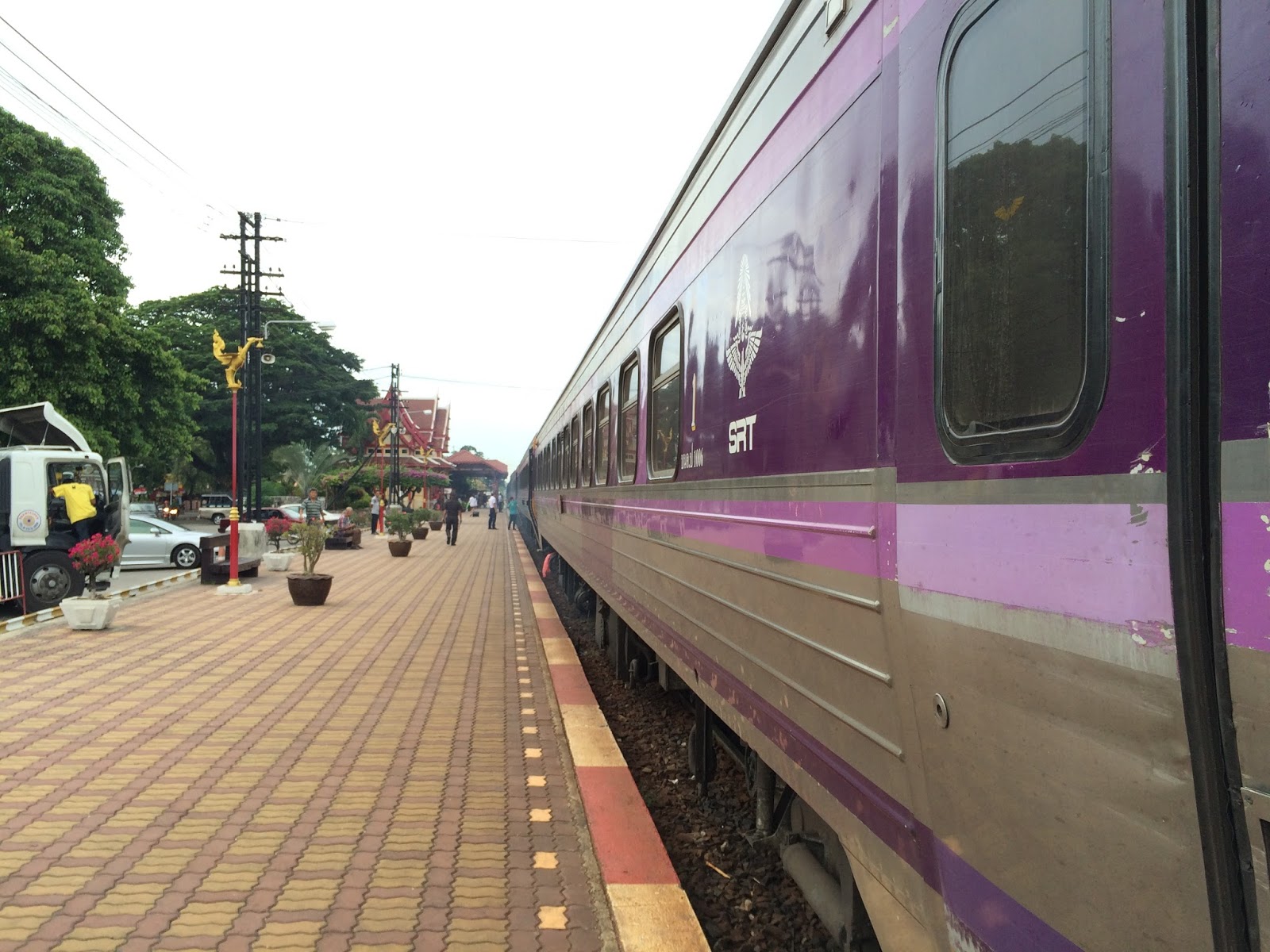
I have always wanted to travel by train all the way to Bangkok from Kuala Lumpur. As the E&O express is way way too expensive for a peasant like me, I decided to do it the cheap way on KTM and SRT, the state railways of Malaysia and Thailand.
Seat61.com was the source of valuable information in planning this trip. The trip was divided into the following portions - Kuala Lumpur to Butterworth on KTM and Butterworth to Bangkok on SRT.
There were two options for me from Kuala Lumpur. First was to take the Ekspres Langkawi that leaves Kuala Lumpur every night for Hadyai before joining the International Express from there or take the Ekspres Rakyat to Butterworth and take the SRT International Express.
I decided on the latter as the Ekspres Langkawi does not have the first class cabin anymore and it would entail a long transit in Hadyai.
From July 2015, the options would increase and make it a lot faster once the Electric Train Service from Kuala Lumpur to Butterworth comes online with a travel time of around 3 and a half hours. This would allow a morning departure and a short transit in Butterworth before taking the SRT International Express.
The first class ticket was purchased online from the KTMB website. I decided to board at the old Kuala Lumpur station as this option would not be possible anymore from July 2015. It's also nicer as I get to wait on the platform and watch trains instead of waiting in the boring holding area of KL Sentral station.
The train arrived a good 15 minutes behind schedule. Most of the time the Indian made YDM locomotives would be hauling this service but on this particular day, a class 25 locomotive was on duty.
The one and only first class or Premier coach was really showing it's age, even though the seats had been given new upholstery, they were in bad shape. My seat tray table was stuck and could not be use plus my window had a condensation problem, so my view was obscured.
Old but comfortable
Deprived of my main source of entertainment...looking outside
There were many areas where the speed was restricted due to track repairs and so by the time we arrived in Ipoh, the train was already 30 minutes late.
Complimentary refreshments
Passengers in Premier class were served a complimentary bottle of water and a donut. A restaurant coach was also available but it was hot and stuffy as the air-conditioning wasn't working plus there was nothing worth buying and of poor quality.
We managed to arrive at the Butterworth station on time at 2220hrs, completing the first leg of my trip.
The station is a long walk of about 1 km to the ferry terminal. I however arranged a pick-up at the station to take me to my hotel on Penang island for a good nights sleep.
As I was a solo traveler, I wanted to travel first class on the train to Bangkok, however first class tickets are not sold in Malaysia. First class is only available from Hadyai. So I made a booking for a single occupancy first class cabin from Hadyai to Bangkok through a travel agency recommended by the seat61 website - www.asia-discovery.com, as SRT does not have an online booking facility.
The booking was easy and efficient with the ticket sent by DHL to me in KL at an extra charge. So for the Butterworth to Hadyai sector, I bought a reserved second class ticket from the Butterworth station. This is a more costly option but secures myself a seat.
If you purchase a cheaper unassigned ticket on the day of travel, you will have to buy one to Padang Besar and another from there to Hadyai during the long transit.
The new Butterworth station is not an example of a user friendly facility. One has to walk up and down many flights of stairs. First from the front porch/lobby up to the first floor. Later it's down again this time from the waiting area to the platform.
If coming from the ferry terminal, you have to navigate up stairs, then walk across a bridge before descending again. Walk a few meters to the lobby before going up again as mentioned earlier. There are lifts but when a train load of passengers arrive, it can take forever for one's turn. So the other option, is to carry your luggage up and down.
This the long stairs from the waiting area down to the platform.
There is however a nice air-conditioned waiting room which has a water fountain and a power socket to recharge your phone.
Relaxing in the waiting room
The incoming train from Bangkok arrived 55 minutes late and it was a huge rush to get us on the train as fast as possible and we managed to depart on time.
Class 24 locomotive on duty
The second class coach
If you book the upper bunk, you get the forward facing seat
While not 100% full, the passengers were an interesting mix. A group of young guys who were traveling to Bangkok to buy cheap T-Shirts for sale later in Malaysia. A young Malaysian born Aussie, who was on holiday in Penang but all her friends were busy with their work, so she bought a ticket to Bangkok but planned to get down at the first station that she found "interesting" and go on an adventure. There were the western backpackers "searching" for the meaning of life in Asia, the group of noisy Malaysian senior citizens on a tour to Thailand, the backpacker who was in dire need of a shower and the young couple looking forward to a romantic getaway at Hua Hin.
As the train raced across the north Malaysian countryside of paddy field and kampungs, the train staff came around taking orders for dinner that would be served during the long transit in Padang Besar. I was starving by this time as I hadn't had lunch yet. He also distributed immigration cards for Thailand and even had pre-paid SIM cards for sale. He spoke a fair bit of English, Bahasa Malaysia and of course Thai.
The very spacious seats
Paddy fields of Kedah
About 2 hours after leaving Butterworth and stopping at Bukit Mertajam, Sungai Petani and Alor Setar, we pull into the border town of Padang Besar. The train will stop for around one and a half hours. Passenger can leave their bags onboard and just take their passports for Malaysian immigration exit check before proceeding to Thai immigration entry processing. Once done most passengers board the train to cool down in air-conditioned comfort away from the sweltering heat. Someone also comes onboard offering to change currency to Thai Baht. I am sure the exchange rate isn't that good.
Once back in my seat, dinner was waiting and the staff offered coffee and tea to go with the meal. Meanwhile, some catch forty winks, while others gather on the platform and start to chat with one another. A brave group even went into town to shop for food before returning to the train.
Scorching heat at Padang Besar
Killing time by taking selfies
Crispy Chicken, cashew chicken with rice
Fruit and Coffee/Tea, all part of the set meal
The restaurant coach and staff coach waiting to be attached to the international express
Once the Ekspres Langkawi train arrives from Hadyai, the Thai railway locomotive that brought it, will take the restaurant and staff coach and attach it to the two waiting passengers coaches from Butterworth.
The staff will clear up dinner and disembark and a new set of crew will take over. This set had very limited English. They then started to offer dinner (again!) that would be served after Hadyai.
Attaching the restaurant and staff coach to our passenger coaches
Made by Hitachi and delivered in 1993
Once the locomotive was attached, we were ushered on board and off we headed into Thailand. An open gate just after the station marked the border. An hour later we pulled into Hadyai's platform 2. The staff coach was detached and moved forward before reversing into platform 1. The restaurant coach, two passenger coached no 9 and 10 were taken by another locomotive and attached to the rear of the waiting train on platform 1. The train is schedule to have a 20 minute stop but as we were late, just minutes after the last three coaches were attached we departed.
I meanwhile had relocated to coach no 2, which is the first class coach.
The long and narrow
In day mode
The staff come around this time to offer drinks and meals for sale. You could also eat at the restaurant coach but it felt stuffy and not very comfortable. The food are freshly cooked and came in large portions. Worth the money and to Asian taste.
The restaurant coach
About an hour after leaving Hadyai, the coach attendant asked if I would like to have the seats turned into beds. As I was traveling alone, he only made up the lower bunk. Dinner was later served in my cabin and it was a good set meal that filled me up.
Once done with dinner I took a walk to the back of the train to explore the train and also chat with the other passengers. There is also a special coach with facilities for passengers who have mobility issues. Well done to SRT for having such facilities.
Special lifts for wheel chair passengers
The coach for passengers in wheel chairs
Once back in my cabin I soon fell asleep but kept waking up due to the jerky ride. By about 4.30am I gave up trying to sleep and just relaxed in bed watching the sun slowly rise.
Waking up to such views is simply priceless
Around 7 am the staff came around taking breakfast orders and once again I stuffed myself. The western breakfast wasn't that good but I still cleaned the plate!
By the time we arrived at Hua Hin, we were a good 2 hours late.
By the time we reach the outskirts of Bangkok, the train was traveling at a painfully slow speed for about an hour before pulling into the majestic Hua Lamphong railway station.
I love old stations like this, they give you a sense of "arrival". They were the grand gateway of their era. Grand landmarks of the city they stand in.
Finally a short rest for this locomotive
I truly enjoyed this journey by train. Sure it was a long one compared to a 2 hour flight but it is by far the more interesting way to travel.
Since getting home, I keep wishing I could this all over right away.
I made a video of the trip and click below to watch.
Thank you so much for reading and visiting my travel blog.


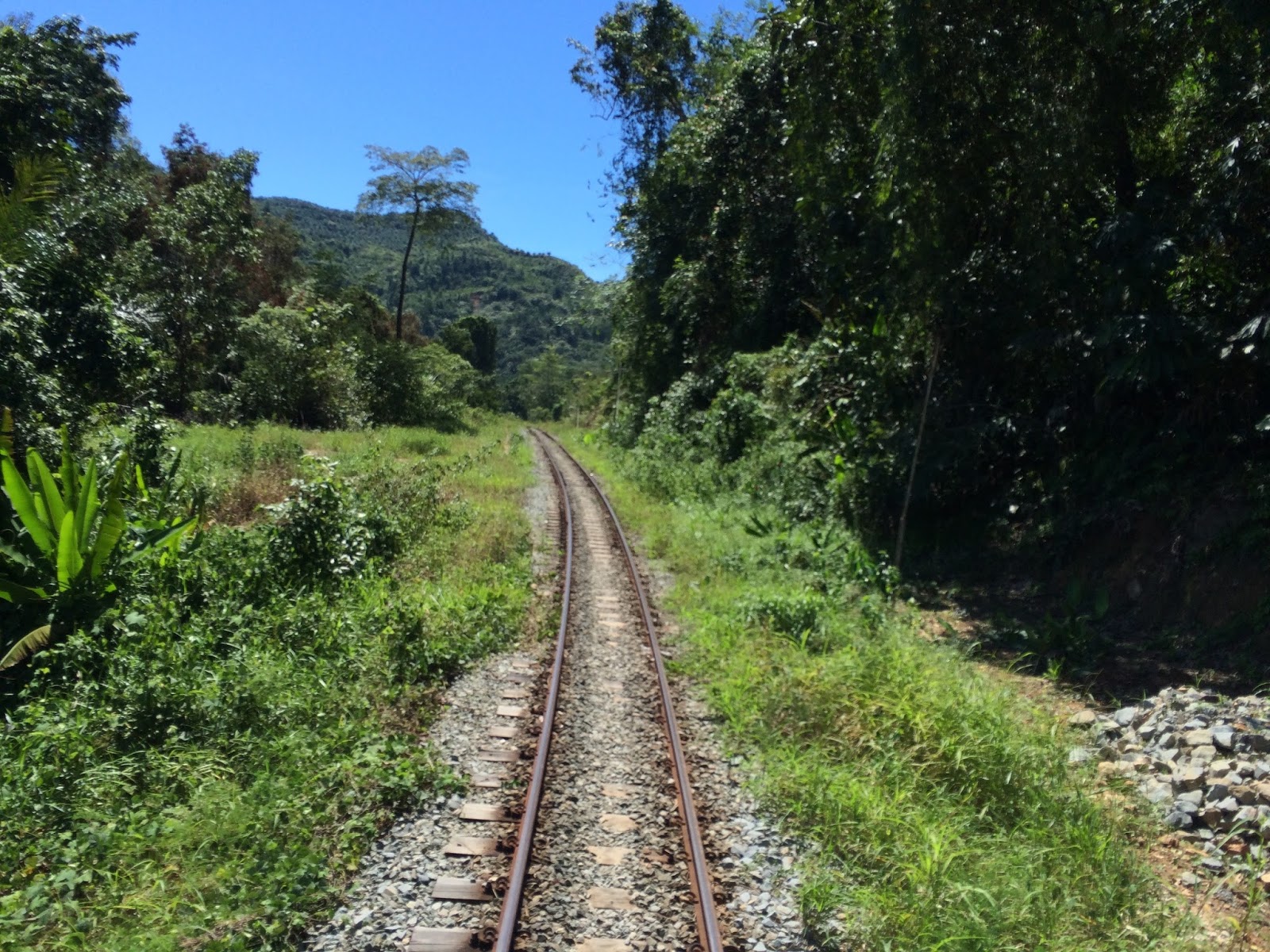

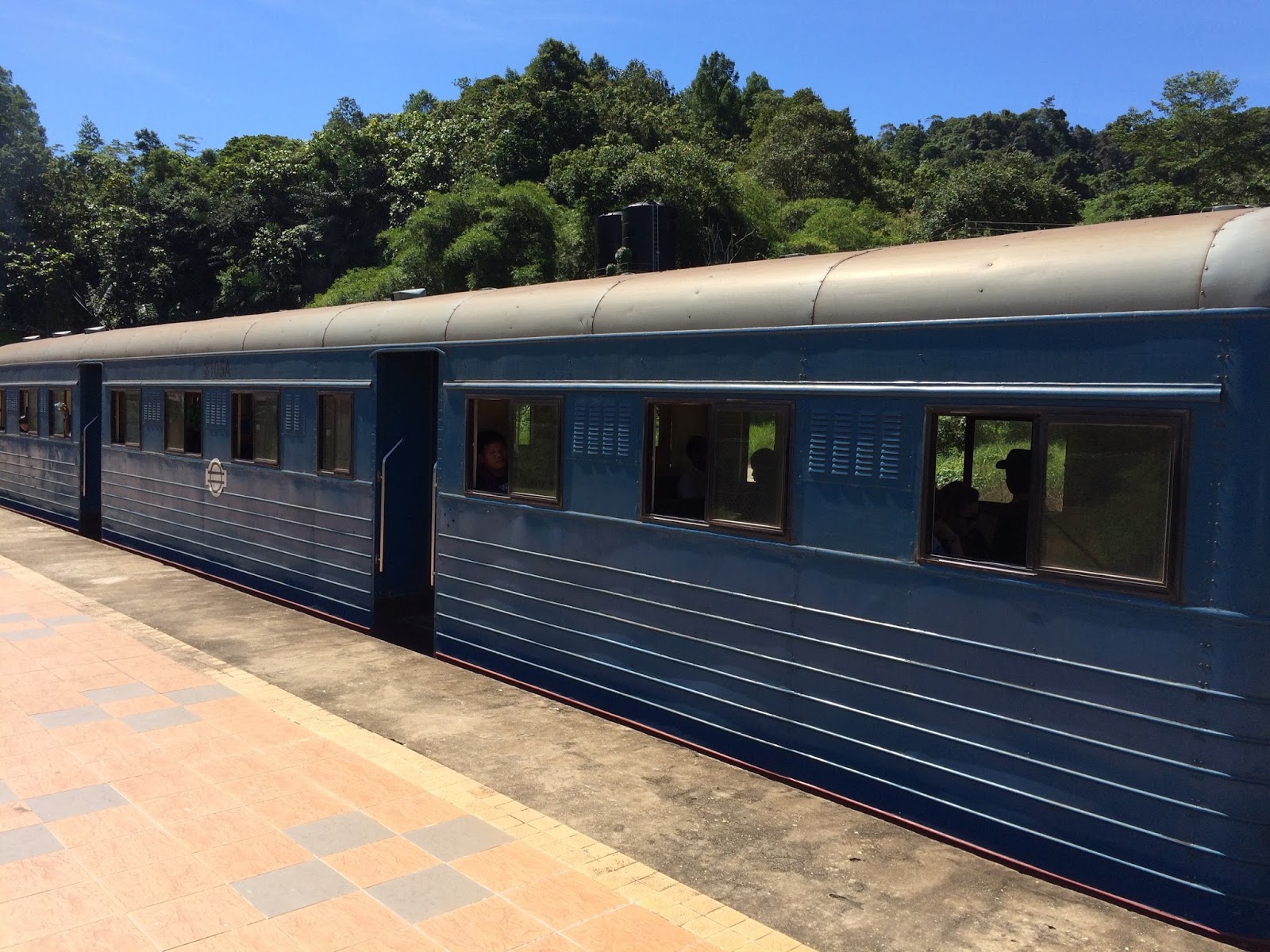


 We approach Halogilat to a sight of a horde of tourists waiting to board our train to Pangi for rafting, and like the day before I had to rush from one train to another for the next part of the trip.


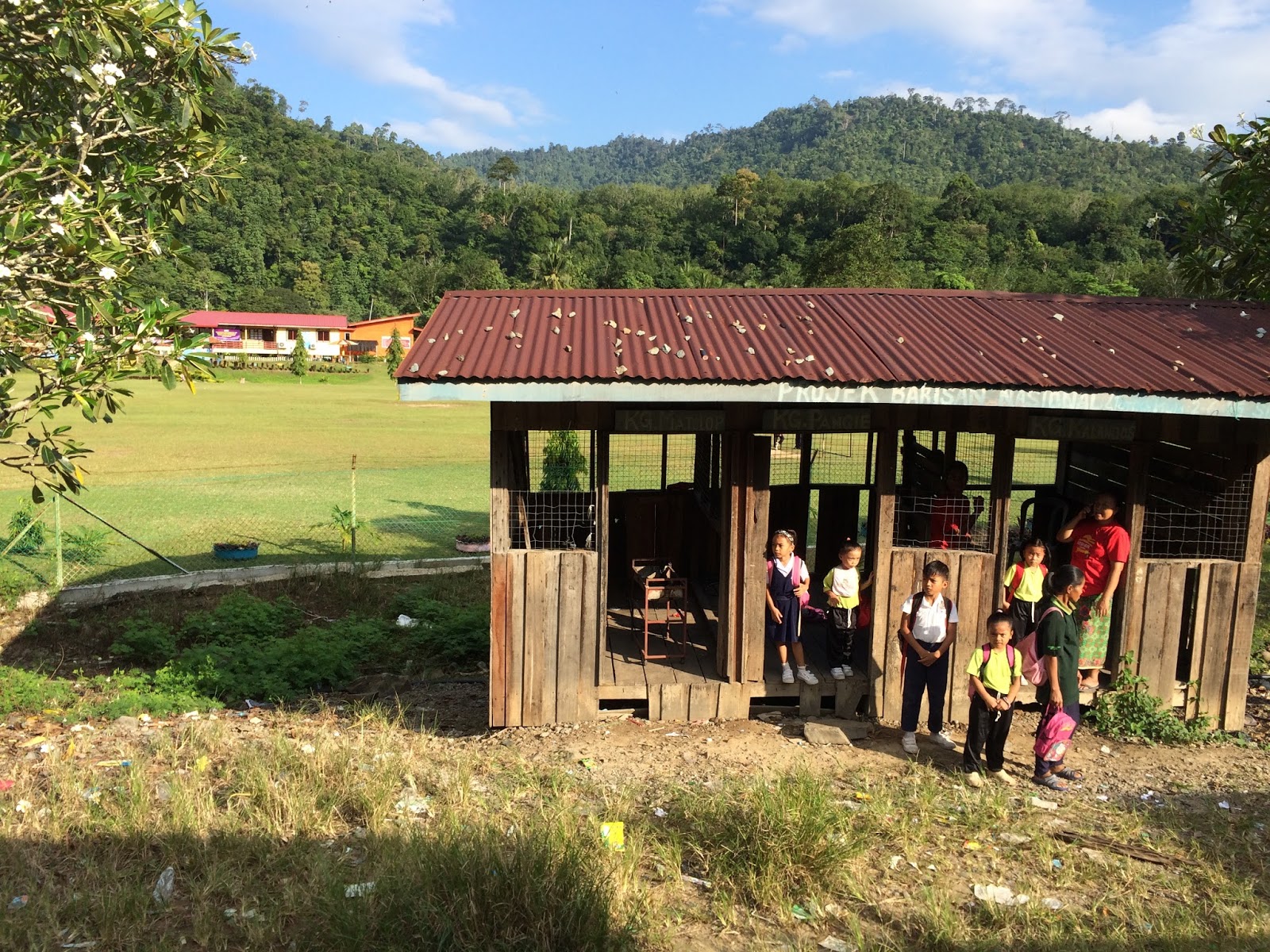


 If you have had an overdose of river and jungle views, then once near Kimanis look out for views of the sea. The tracks start to follow the beach and at some places, it runs right up to the beach.